Featured

Analyzing Repayment Terms On Consolidation Plans for 2026
Table of Contents
Missed payments create charges and credit damage. Set automatic payments for every card's minimum due. By hand send out extra payments to your top priority balance.
Look for sensible changes: Cancel unused subscriptions Reduce impulse costs Cook more meals in the house Sell items you do not utilize You do not need severe sacrifice. The goal is sustainable redirection. Even modest extra payments substance over time. Expense cuts have limitations. Earnings growth broadens possibilities. Consider: Freelance gigs Overtime shifts Skill-based side work Selling digital or physical items Treat extra income as financial obligation fuel.
Financial obligation benefit is psychological as much as mathematical. Update balances monthly. Paid off a card?
Analyzing Interest Rates On Loans in 2026
Everybody's timeline varies. Concentrate on your own development. Behavioral consistency drives successful charge card financial obligation reward more than best budgeting. Interest slows momentum. Minimizing it speeds outcomes. Call your credit card provider and inquire about: Rate reductions Hardship programs Advertising offers Numerous lending institutions prefer dealing with proactive clients. Lower interest implies more of each payment hits the principal balance.
Ask yourself: Did balances shrink? A versatile plan makes it through real life much better than a stiff one. Move financial obligation to a low or 0% introduction interest card.
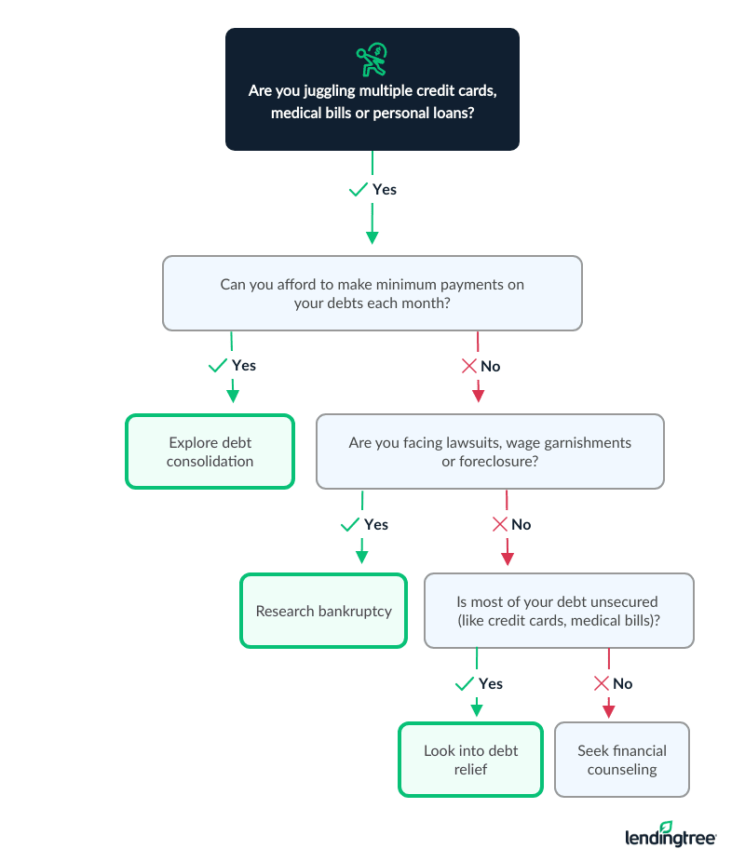
Integrate balances into one fixed payment. Negotiates reduced balances. A legal reset for overwhelming financial obligation.
A strong financial obligation strategy USA homes can rely on blends structure, psychology, and adaptability. Debt benefit is hardly ever about extreme sacrifice.
Combine High Interest Credit Card Debt for 2026
Paying off credit card financial obligation in 2026 does not require perfection. It requires a smart plan and consistent action. Each payment decreases pressure.
The smartest relocation is not waiting on the best moment. It's beginning now and continuing tomorrow.
In discussing another possible term in office, last month, former President Donald Trump declared, "we're going to pay off our debt." President Trump likewise guaranteed to pay off the nationwide financial obligation within 8 years during his 2016 presidential campaign.1 It is impossible to know the future, this claim is.
Over 4 years, even would not be enough to pay off the financial obligation, nor would doubling profits collection. Over 10 years, settling the debt would require cutting all federal spending by about or enhancing revenue by two-thirds. Presuming Social Security, Medicare, and defense spending are exempt from cuts constant with President Trump's rhetoric even getting rid of all staying costs would not pay off the financial obligation without trillions of additional revenues.
How to Secure Competitive Loans for 2026
Through the election, we will provide policy explainers, truth checks, budget scores, and other analyses. At the beginning of the next governmental term, debt held by the public is likely to total around $28.5 trillion.
To achieve this, policymakers would require to turn $1.7 trillion typical yearly deficits into $7.1 trillion annual surpluses. Over the ten-year budget plan window beginning in the next governmental term, spanning from FY 2026 through FY 2035, policymakers would require to achieve $51 trillion of budget and interest cost savings enough to cover the $28.5 trillion of preliminary financial obligation and avoid $22.5 trillion in debt accumulation.
It would be literally to settle the debt by the end of the next governmental term without large accompanying tax boosts, and most likely impossible with them. While the required cost savings would equal $35.5 trillion, overall spending is forecasted to be $29 trillion over that four-year period of which $4 trillion is interest and can not be cut directly.
Expert Advice for Managing Total Debt for 2026
(Even under a that assumes much faster economic growth and considerable new tariff profits, cuts would be nearly as big). It is also most likely difficult to achieve these savings on the tax side. With overall income anticipated to come in at $22 trillion over the next presidential term, profits collection would have to be almost 250 percent of current forecasts to settle the nationwide debt.
The Future of Interest Rates and Your 2026 Debt MethodAlthough it would require less in yearly savings to pay off the national financial obligation over 10 years relative to four years, it would still be nearly impossible as a useful matter. We estimate that paying off the financial obligation over the ten-year spending plan window between FY 2026 and FY 2035 would need cutting spending by about which would cause $44 trillion of primary spending cuts and an additional $7 trillion of resulting interest savings.
The job ends up being even harder when one thinks about the parts of the budget plan President Trump has removed the table, along with his call to extend the Tax Cuts and Jobs Act (TCJA). For example, President Trump has committed not to touch Social Security, which implies all other spending would have to be cut by nearly 85 percent to completely get rid of the nationwide debt by the end of FY 2035.
If Medicare and defense costs were likewise excused as President Trump has sometimes for spending would need to be cut by almost 165 percent, which would clearly be impossible. In other words, spending cuts alone would not suffice to settle the nationwide debt. Huge boosts in revenue which President Trump has actually typically opposed would likewise be required.
Essential Tips for Reducing Personal Liabilities for 2026
A rosy situation that incorporates both of these does not make paying off the debt much simpler.
Significantly, it is highly unlikely that this profits would materialize., accomplishing these two in tandem would be even less most likely. While no one can know the future with certainty, the cuts essential to pay off the financial obligation over even ten years (let alone four years) are not even close to practical.

Latest Posts

How to Combine High Interest Debt in 2026

How to Combine High Interest Debt in 2026

Smart Debt Calculators for 2026